
After Brazil Climate Talks, Thank God There’s Research Into a Plan B
- Posted on
- By Mike Tidwell
- In Blog

By Mike Tidwell, Executive Director, Chesapeake Climate Action Network (CCAN)
“We are moving in the right direction but at the wrong speed.”
That was the key message from Brazil’s President Luiz Inacio Lula da Silva as the United Nations climate talks in Belem, Brazil wrapped up in November. The world is currently projected to warm between 2.5-2.9 degrees Celsius by 2100, according to U.N. estimates released during the conference. That warming would bring incalculable harm to the planet. Still, it’s down from the 3.5 degrees of warming projected just a decade ago.
Progress in recent years has come in part from China, whose leaders created the most buzz at the Belem climate talks with their powerhouse exports of nearly $1 trillion worth of solar panels, batteries and EV since 2018. But China, while revolutionizing the tools the world needs to decarbonize, is still building NEW coal plants inside its borders. Those coal plants – combined with the reckless boom in fracked gas and oil in the US (a nation that didn’t even bother to send a delegation to Belem) – contribute to a world already approaching 1.5 degrees C of warming above preindustrial levels.
This real-time warming is already creating hurricane monsters like Helene in the U.S. and crop-killing heat waves in India and sea-level rise everywhere. A near doubling of the current heat to up to 2.9 degrees C will almost certainly be catastrophic, according to our best science.
So thank god a growing number of scientists, philanthropists, government agencies, and nonprofit leaders worldwide are committed to exploring a possible “Plan B” for the planet. Their goal is to find potentially safe ways to artificially cool the Earth until the inevitable full transition to clean energy is achieved globally later this century.
Until recently, this concept of “geoengineering” was considered too controversial to even discuss in many quarters. But today, as the heat mounts, full-blown programs at Harvard University and the University of Chicago are exploring ways to effectively reflect sunlight away from the planet while international conferences on the topic draw thousands of people.
Last year, the biggest step to date on this topic occurred when the United Kingdom committed to spending $75 million on geoengineering research projects scattered across the globe. The goal of the UK’s Advanced Research and Invention Agency is to transparently invest in computer modeling, atmospheric observations, and limited outdoor testing of technologies that could one day cool the planet. Ideas include everything from artificially brightening marine clouds with saltwater spray to mimicking the cooling properties of volcanic eruptions by placing sulfur aerosols in the stratosphere.
To be clear, no one – not the UK, not researchers at Harvard, not the growing number of climate-fighting nonprofits like mine around the world – is calling for actual deployment of ANY system to engineer the climate. The goal is simply to research and test plausible ideas so that future world leaders at least have a few carefully vetted options to consider if climate collapse becomes eminent.
Transparency is a key feature embraced by nearly all the actors in this growing geoengineering conversation and research push. The ARIA program, for example, is governed by a set of published principles that emphasizes a public versus private involvement in research and testing. The agency’s commitment to open dialogue with communities where research occurs is meant to avoid mistrust and confusion wherever possible.
Unfortunately, in the conspiracy-rich world of our current media landscape, preposterous theories abound about governments secretly creating storms to punish political opponents or using airplane “chemtrails” to brainwash citizens. US Environmental Protection Agency Administrator Lee Zeldin last July was compelled to publicly confirm the obvious: The US government is not engaged in any activities to change the weather or pollute the sky with mind-altering substances.
The opposite is actually true. An $11 million annual program at the National Oceanographic and Atmospheric Administration protects the world from any rogue attempts to alter the climate. NOAA flies special B-57 planes regularly into the stratosphere to measure the concentration of various light-reflecting aerosols there. If these levels suddenly change in the future, NOAA could alert world leaders that a rogue nation or a private actor was tampering with the climate without international agreement.
This is good to know given that at least two private companies – one called Make Sunsets and the other Stardust – have raised millions in private capital and signaled an interest in commercializing geoengineering efforts. They have not been transparent in their activities and average people have every right to feel nervous about such companies.
The better approach – the only sensible approach given the health of the entire planet is at stake – is to increase publicly funded research with guidance from governments, universities and nonprofits. Thankfully, even as the Belem climate talks wrap up with underwhelming results, the growing support for responsible geoengineering research continues to grow.
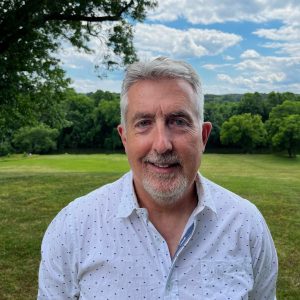
About the author: Mike Tidwell is founder and director of the Chesapeake Climate Action Network, a grassroots nonprofit dedicated to raising awareness about the impacts and solutions associated with global warming in Maryland, Virginia, DC, and West Virginia.
Under Tidwell’s leadership, CCAN has helped pass landmark clean-energy legislation in Maryland and the District of Columbia; blocked coal and oil development plans in Virginia; and worked with groups nationwide to push for a fair and effective carbon cap policy on Capitol Hill. A long-time resident of Maryland, he lives in Takoma Park with his wife Beth and son Sasha. Read more about Mike here.