
Facebook Facebook Facebook Facebook
Close Panel

Log In

Mike Tidwell, Director

Mike Tidwell, Director

This e-mail address is being protected from spambots. You need JavaScript enabled to view it

(240) 460-5838

Mike Tidwell is founder and director of the Chesapeake Climate Action Network, a grassroots nonprofit organizations dedicated to raising awareness about the impacts and solutions associated with global warming in Maryland, Virginia, and Washington, D.C.. He is also an author and filmmaker who predicted in vivid detail the Katrina hurricane disaster in his 2003 book Bayou Farewell: The Rich Life and Tragic Death of Louisiana’s Cajun Coast. His newest book, focusing on Katrina and global warming, is titled The Ravaging Tide: Strange Weather, Future Katrinas, and the Coming Death of America’s Coastal Cities. Tidwell’s most recent documentary film, We Are All Smith Islanders, vividly depicts the dangers of global warming in Maryland, Virginia, and D.C.

Tidwell has been featured in numerous national media outlets including NBC's Meet the Press, NPR, the New York Times, the Baltimore Sun, and the Washington Post.

In 2003, Tidwell received the Audubon Naturalist Society's prestigious Conservation Award. Two years later he received an honorary Doctorate of Letters from Nicholls State University in Thibodaux, Louisiana. A long-time resident of Maryland, Tidwell lives in Takoma Park with his wife Beth and son Sasha.


The Latest From Mike Tidwell, Director

14May2013

We now live in a world of veritable science fiction. Last week, scientists reported that our delicate, life-giving global atmosphere has reached a new level of danger: 400 parts per million of carbon dioxide concentration. There hasn't been this much heat-trapping CO2 in the Earth's atmosphere in at least 3 million years, long before human beings evolved. If there was ever a wake-up-call moment on global warming, a time to become really alarmed, it's now!

28October2012

What might Hurricane Sandy do to New York City? See excerpts below from my 2006 book The Ravaging Tide: Strange Weather, Future Katrinas, and the Coming Death of America’s Coastal Cities (Simon and Schuster/Free Press). It’s a depressing title meant to help shock us into preventing these worst-case scenarios from coming true via global climate change. But it might now be too late for parts of imperiled New York. As you read, keep in mind that as of Sunday night October 28th, the National Hurricane Center was forecasting that the storm could hit anywhere between Delaware and Rhode Island, with a surge tide as high as 11 feet in some places. Even if New York City avoids a direct strike, it is still facing a potentially “worst-case scenario” in terms of surge tides.

12October2012

I want the major candidates – Obama, Romney, Kaine, Allen – to explain my homeowners insurance mailing last month. Travelers – that friendly red umbrella company – sent me a terrifying color flier with my bill. It depicted an all-American home (two stories, garage) with ominous storm clouds bearing down on it and a full-blown tornado roaring toward a direct strike. Millions of customers like me got this you-could-be-Dorothy-in-Kansas-soon image under this headline: “How the Property Insurance Marketplace is Evolving.”

Evolving? How? Well, next to the twister about to hit the house, Travelers lists some raw stats on the flier: Federal natural disaster declarations set a record in 2011. Thunderstorms alone cost $25 billion, doubling the previous annual mark. And winter storm losses have almost doubled since the 1980s.

30May2012

 What was the hardest part about pedaling a bike 300 miles from Manhattan to Washington, D.C.? The head winds in central New Jersey certainly weren’t a picnic. The horse poop along Amish country roads was a challenge. Then there were the rain-slippery bridges near St. Peter’s Village, PA and the seemingly endless hills of Maryland’s northern horse country. 

But honestly, the rural scenery was so stunningly beautiful all along the way that the hardest part was just knowing that this pastoral east-coast landscape is in danger of disappearing – soon – because of the unfolding calamity of climate change.

18March2011

The Gazette of Business and Politics

By Mike Tidwell and Jim Strong

Labor unions and environmental groups haven't always seen eye to eye in Maryland. The state's "green" leaders often have seemed more interested in trees than workers. And unions traditionally have focused more on short-term wages than long-term threats like global warming.

22March2011

WAMU

Commentary by Mike Tidwell

As a boy, I remember sitting in my family's Ford Pinto in a four-hour long gas line during the Arab oil embargo of 1973. My dad told me then, with complete confidence, that oil would be a bad memory when I grew up. Our cars would run on something, he said, but not on this black liquid from countries that don't like us.

02September2011

WAMU

Commentary by Mike Tidwell

I went to the White House and got arrested last week because I don't like hurricanes -- and I really didn't like Irene. The storm knocked out power to my Takoma Park home from Sunday to Monday and it took off the top of my chimney.

28September2011

The U.S. Peace Corps marked its 50th anniversary in late September with festivities all across the nation’s capital. Former employees like Bill Moyers and Chris Matthews hosted elegant parties as the storied agency took a celebratory bow.

And with good reason. Founded by John F. Kennedy in the idealistic sixties, the Peace Corps has lived on to send more than 200,000 Americans overseas to help feed, clothe, and better educate the poorest of the poor in 139 countries.

But as a former Peace Corps volunteer myself, having lived in a mud-hut village for two years in the Congo, I find it hard to celebrate right now. That’s because our current charismatic and youthful president – Barack Obama – is threatening to undo much of the good work achieved by the Peace Corps over the past half century.

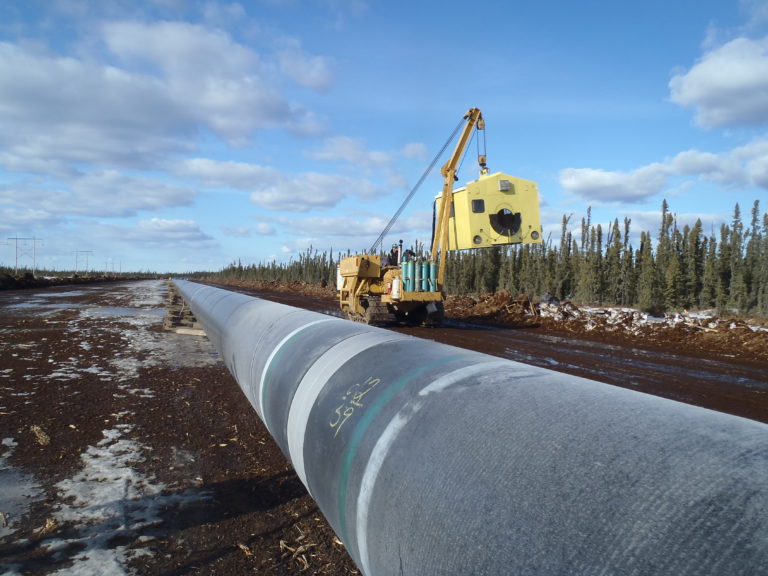
It’s not widely appreciated, but here’s the undeniable fact: Energy policies embraced by the Obama White House are bringing direct harm to every poor village on the face of the planet, from the highlands of Papua New Guinea to the rainforests of South America to the arid plains of Obama’s own ancestral Kenya. And the biggest threat of all is yet to come. It’s an international “tar sands oil pipeline” from Canada to America which, if approved by the Obama Administration, will affect all nations, but especially the impoverished of the world.

Page 1 of 6
Chesapeake Climate Action Network    |  
6930 Carroll Ave, Suite 720 Takoma Park, Maryland 20912    |   +1-240-396-1981