30
2013
Global warming will shift world's wine-growing regions
Have a favorite local vineyard in Virginia or Maryland? Make sure to get its wine while you can. A study released recently by Conservation International and Environmental Defense Fund found that the world's wine-growing regions will shift as the planet heats up. While other studies have examined the impact of climate change on specific wine-growing regions, like California, this is the first one I've seen that provides global maps.
Check out the map I pulled from Environmental Defense Fund's Google Earth flyover video:

Why will the warming of the planet by a few degrees have such a dramatic impact? Wine grapes are incredibly delicate crops. Even small changes in temperature can mean the difference between a $100 Cabernet Sauvignon and cooking sherry. With ripening timelines shifting, some vintners in California have been forced to harvest their fruit in the middle of the night to get it when it’s cool. Warming can also bring more risk of bacterial diseases, like Pierce’s disease, to vineyards.
Athena Vineyards in Heathsville, VA participates in Climate Impacts Day in May 2012
14
2013
The following blog post was originally posted under the title, "dear legislators..." on the ClimateHoward Blog: http://climatehoward.wordpress.com/. It was written by Elisabeth Hoffman.
So, we are taking stock. On the downside: The fracking moratorium legislation for Maryland fell one vote short of getting out of its Senate committee during this General Assembly session.
On the plus side: The Senate committee at least voted. And the vote was sooo close.
And, we are not going away. Or giving up.
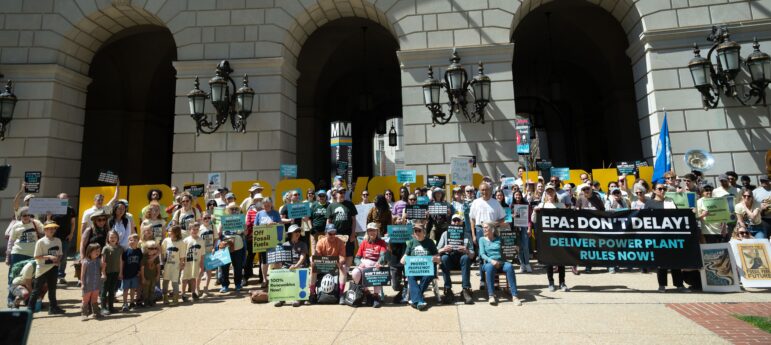
That was the message from more than 150 concerned Marylanders at yesterday’s rally in front of the State House in Annapolis. In the pointed words of Mike Tidwell, Chesapeake Climate Action Network’s director, we told legislators: You had better “get to work” to protect communities, the environment and the climate from fracking.
The rally, organized by CCAN, included parents and grandparents, college and high school students and teachers (including a group from Glenelg Country School in Howard County), a couple of babies in backpacks and strollers, nurses and other activists, and Western Maryland residents who live in areas that would be drilled or where natural gas compressor stations are planned.
One of the biggest lessons of the day, though, came from Lois Gibbs, who organized her Love Canal neighbors in the late 1970s when toxic waste buried under their homes and schools started making people sick.
6
2013
On September 23, 2010 at St. Paul's by-the-Sea Episcopal Church in Ocean City, Maryland, CCAN and other advocates held our first town hall in the campaign to bring offshore wind power to the state.
Over two and a half years later, on March 8th, 2013, the Maryland Senate joined the House of Delegates in passing the Maryland Offshore Wind Energy Act of 2013 (HB 226), creating a process to support the development of Maryland's first offshore wind farm.
Marylanders for offshore wind power: what follows is your story – a chronological timeline of key events in the campaign that brought us to today. It was all of your phone calls, your 10,000 petitions, hundreds of hand-written letters, letters-to-the-editor, and trips to Annapolis to rally together and to lobby your legislators that have made this happen. Maryland will be a leader in offshore wind because of you.
5
2013
Yesterday evening, the Baltimore City Council unanimously endorsed our legislation before the state General Assembly that would place a moratorium on fracking in Maryland, adding its voice to the mounting calls for tougher scrutiny of the risks of the controversial gas drilling method.
The resolution, introduced by Councilman Bill Henry and co-sponsored by 10 council members, including Council President Bernard Young, supports passage of the “Maryland Hydraulic Fracturing Moratorium and Right to Know Act of 2013,” which is being introduced in Annapolis by State Senator Rob Zirkin and State Delegate Heather Mizeur.
"The City Council is taking up this issue because it's clear that fracking can seriously impact not only the physical environment, but the health of entire communities,” said Councilman Bill Henry. “We want to make sure that when the General Assembly makes their ultimate decision about fracking’s future in Maryland, it won't be because they've been rushed, but because they have been fully informed about all of the potential risks."
5
2013
An account of the Polar Bear Plunge written by first time plunger and current CCAN intern Rachel O’Keeffe
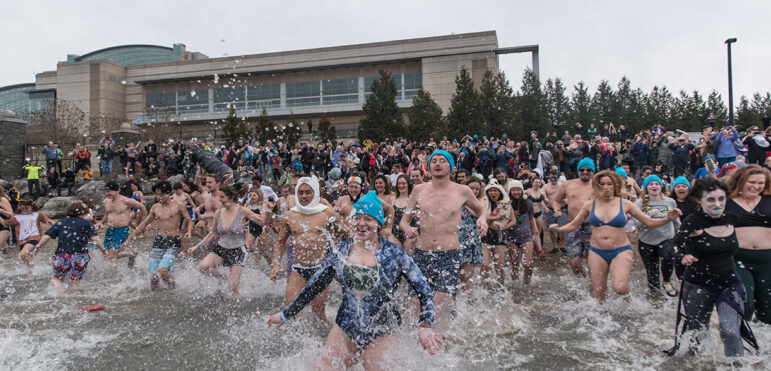
On January 26th, I became a part of a now 8-year-long tradition: the Polar Bear Plunge! As the crowd around me counted down from 10, the excitement spread like an electric current. My adrenaline was pumping as I ran into the icy Potomac. I kept jumping in the water, for fear that if I stopped, the icy water would further penetrate my skin.
30
2013
This post was written by CCAN Communications Fellow Annie Mackin.
Superstorm Sandy. Drought. Raging wildfires. It’s time to act on climate change, and President Obama knows it. During his second inaugural speech, he admitted that “failure to do so would betray our children and future generations.”
28
2013
It was definitely our most successful from a fund-raising standpoint, exceeding, as this is written, our goal of raising $60,000 by over $5,000. But it was much more than this.
10
2013
On Wednesday, fracking activists held a fracking water taste test directly in front of the State House to showcase for legislators the threat that fracking poses to drinking water in Maryland. In states like PA and Wyoming, concerned homeowners have pointed to fracking as a cause of drinking water contamination.
Dozens of Marylanders from across the state donned red Fracking Moratorium Now! t-shirts, buttons, and stickers to make sure the issue of fracking was on legislators minds as they headed in for their first day of the 2013 General Assembly session.
To convey the dangers and risks of fracking to Maryland water sources, we had a series of water samples collected from PA and Maryland The first sample was clearly contaminated drinking water taken from an abandoned home near a fracking site in Butler County, Pennsylvania. The previous owners, the McEvoy family, suffered severe health impacts from drinking and bathing in the contaminated water and had to move away. Their community, called the Woodlands area, includes 12 families who are still without a clean water source. Please visit: http://www.marcellusoutreachbutler.org/ for more information.
6
2012
UPDATE (12/10/12): Read on to take action and to download and view featured presentations from the conference.
On Saturday, nearly 300 Marylanders from across the state are gathering in Baltimore to discuss a big emerging threat to our communities: fracking.
Fracking is a dangerous method of drilling for natural gas linked to widespread environmental and health impacts in neighboring states. The conference is the first to bring activists from across Maryland together with state lawmakers, national climate and health experts, and people on the front lines of fracking in western Maryland and Pennsylvania to discuss the risks of fracking and how our state should respond.
To join us on Saturday and for more details, go to: http://mdfrackingconference.eventbrite.com.
31
2012
Maryland was just hit by Hurricane Sandy, the largest storm ever recorded to hit the East Coast, but not as hard as states like New Jersey and New York:
"We all dodged a bullet on this one," Anne Arundel County Fire Battalion Chief Steve Thompson said Tuesday from the county's emergency operations center. "If that storm would have wiggled a little bit south, with those winds, it would have been a doozie."
Yet, 300,000 people from Virginia to Baltimore remained without power Tuesday evening and many areas of the state experienced extensive flooding. The fishing pier on Ocean City’s iconic boardwalk is now half-gone. Sadly there were also a couple storm related deaths in Maryland as well as a number of injuries.
As we begin to rebuild, the first thing we must do is make sure everyone is safe and has what they need to survive in our state and across the country. Please donate if you can to the American Red Cross as they most certainly will need more robust funding in the coming years and decades.
Once we get back on our feet, with the metro running in DC and the subways back on track in New York City, we must immediately focus on what we can do to lessen the wrath of ever-worsening storms like Sandy. Perhaps Stephen Lacey and Joe Romm put it best when describing the link between human-caused climate change and these new super-storms: