
Victory for wind power in Maryland!
The General Assembly has passed the Offshore Wind Energy Act of 2013, sending the bill to Gov. Martin O'Malley's desk.The legislation will put Maryland on the path to tapping our vast wind energy resource, by incentivizing more than 200 megawatts of wind power ten miles off the coast of Ocean City.
Advocates say this is just the first step toward a goal of over 1,000 megawatts of ocean-based wind development in coastal Maryland. Regionally, the legislation is another concrete move toward a major new and clean power source for the East Coast. Construction of the Cape Wind offshore project in Massachusetts will begin later this year while New Jersey, like Maryland, is moving forward with incentive policies.
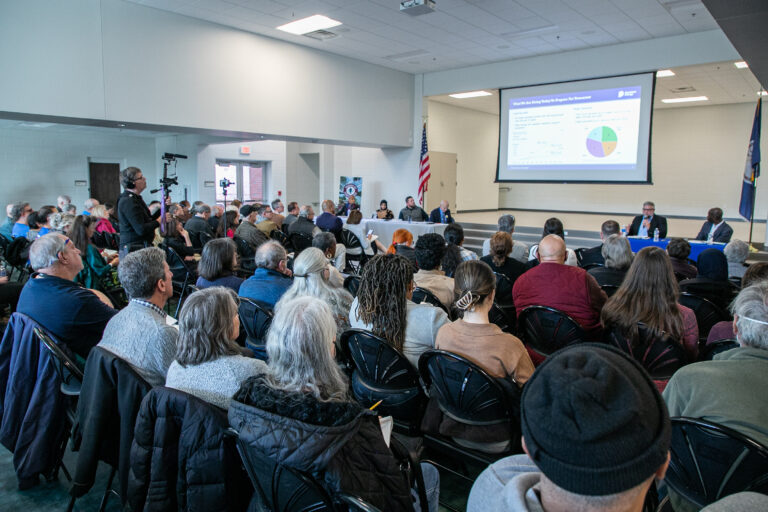
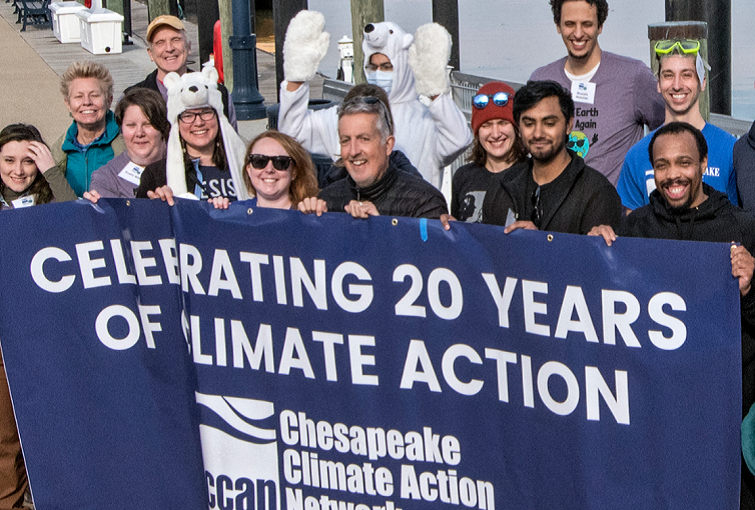
This victory would not have been possible without the tireless work of thousands of Marylanders, who built a poweful grassroots campaign that took us all the way from our first town hall meeting in 2010 in Ocean City, all the way to the governor's desk.
Background
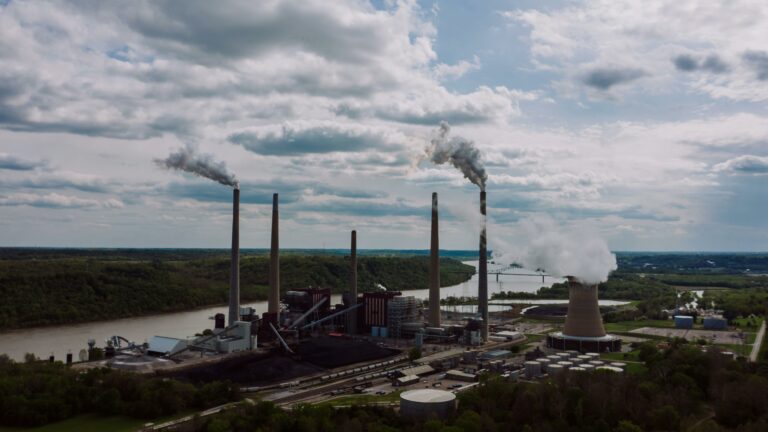
Historically, Maryland has been a very eco-conscious state, boasting some of the nation's most stalwart environmental laws. With more than 3,000 miles of tidal shoreline and the majestic Chesapeake Bay mostly within its borders, the livelihood and lifestyles of Marylanders are intrinsically connected to the health of the state's environment. In spite of this connection, Maryland overwhelmingly relies upon the planet's dirtiest fossil fuel -- coal -- to meet its electricity needs. Nearly 60 percent of Maryland's electricity comes from coal-fired power plants, much of which is imported from out of state and involves mountaintop removal mining that devastates the health of communities.
Still, Maryland has clearly displayed its commitment to improving its energy choices. Maryland has set a Renewable Portfolio Standard (RPS), pledging that 20 percent of the state's electricity needs will be met by renewable energy sources, including wind and solar power, by 2022. Offshore wind power is Maryland’s only homegrown energy resource abundant enough to fulfill our renewable energy standard.
Additionally, a moderately sized offshore wind farm would create over 1,500 jobs, while stabilizing our energy costs. Because the fuel is free, offshore wind offers the ability to lock-in long-term (20 years or more) energy costs without the threat of rising fossil fuel prices. A study by the Abell Foundation found that offshore wind power could produce the equivalent of two thirds of Maryland's current electricity demand.
The Fight for Maryland Offshore Wind Energy
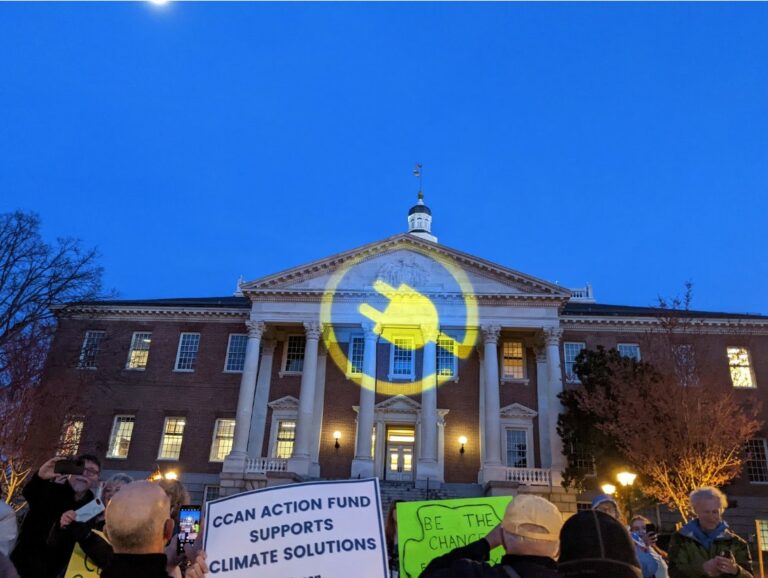
During the 2011 Maryland General Assembly session, a broad coalition of environmental and labor groups, including CCAN, worked hard to pass a bill to guarantee the construction of an offshore wind farm off the Ocean City coast. In an unprecedented show of grassroots strength, CCAN and its partners collected 10,000 petition signatures, generated thousands of emails and calls to legislators, and successfully kept the issue at the front and center of public debate throughout the legislative season.
Despite this undeniable momentum across the state, the bill was not brought to a vote before the 2011 legislative session ended, with legislators citing the need for an offshore wind study. The Chesapeake Climate Action Network, our coalition partners and most importantly, our members, redoubled our efforts to educate citizens and lawmakers across the state about Maryland's need to develop offshore wind energy as a key component of a clean energy future.
A poll conducted in December 2011 showed that 62 percent of Marylanders support developing Maryland's offshore wind resources, even if it requires households to make a small initial investment of a couple of extra dollars a month on their energy bills. Given this support, momentum for legislation to incentivize the construction of a Maryland offshore wind farm continued to grow into the 2012 legislative session, and in fact led to the passage of a bill by an 88-47 vote in the House of Delegates. However, despite enjoying enough backing to pass the full Senate, the bill fell one vote short of the six needed for a favorable report from the Senate Finance committee.
After the 2012 General Assembly session, the campaign for Maryland offshore wind continued, and the Marylanders for Offshore Wind Coalition grew stronger and broader than ever, with many new business, faith, health and local community allies joining the effort throughout the year. Political leaders in Annapolis continued to signal their support for the initiative, offshore wind advocates vowed to push even harder for legislation in 2013.
We kept in mind that past experience with clean energy legislation in Annapolis showed us it often takes a few years to win, and given the enormous potential of the Free State's offshore wind resources, it was a virtual certainty that an offshore wind bill would pass the General Assembly in the not-too-distant future.
Federal Permitting
In November 2010, The Department of the Interior (DOI) announced efforts to streamline the federal permitting process for offshore wind power. The Smart from the Start wind energy initiative for the Atlantic Outer Continental Shelf represents important progress toward responsibly streamlining the permitting and leasing process for offshore wind farms, while ensuring the best siting and environmental assessment of offshore wind projects. Learn more about Smart from the Start here.
In July 2011, DOI released its draft environmental assessment (EA) for proposed mid-Atlantic offshore wind energy development sites. While the issuance of this EA is solid encouragement that offshore wind energy moves ever-closer to becoming a reality in Atlantic waters, this announcement wasn't all positive news for Maryland. The area where wind turbines might be placed was slashed from 206 square nautical miles to 94 square nautical miles in the preferred scenario, while one alternative scenario being considered would reduce the area even further.
The report said that the Coast Guard recommended removing a swath of leasing blocks because they were in a path generally taken by ships. CCAN and its partners acknowledge the need to keep shipping lanes open but think that DOI should be working to identify even more potential areas for offshore wind power development, not cutting these areas. Research shows that offshore turbines produce energy more efficiently if spaced more widely apart. It's vital that we fully embrace this clean, inexhaustible energy source, and that means allowing turbines the space they need to efficiently produce energy.
Take Action
This is a huge victory - one that will position Maryland as a leader in not only the offshore wind industry, but America's clean energy future. However, even after Gov. O'Malley signs the bill, we'll need to stay engaged in the offshore wind permitting process at the federal level to make sure this legislation translates into wind turbines producing electricity off the coast of Maryland as soon as possible.
Getting this bill through the General Assembly has been a labor of love, and one of the biggest achievements yet of our state’s growing climate movement.
- Get Involved: Contact Maryland Field Coordinator Megan Jenny at megan@chesapeakeclimate.org or 240-396-1993.
- Follow the Maryland wind coalition on Facebook and Twitter.
- Thank your senators who voted in favor of offshore wind - and tell those who didn't that you expect more from them.
Learn More about this Campaign
- Visit the Marylanders for Offshore Wind coalition website at http://www.marylandoffshorewind.org.
- Visit the Business Coalition for Maryland Offshore Wind coalition at http://www.bizmdosw.org.
- Read the 2012 Maryland Offshore Wind Energy Act
- Learn more about the bill from the Maryland Energy Administration
- Read our one-pager about the 2012 bill
- Maryland Offshore Wind Coalition Letter: See the official letter from our coalition of environmental, religious, and labor groups urging the state's development of offshore wind energy.
- Business & Organizational Supporters of Maryland Offshore Wind: Want to join this list? Email tom@chesapeakeclimate.org.
- Sign-on letter from Maryland leaders to Speakers Miller and Bush
- Read testimony from a prominent Harvard doctor in support of the health benefits of the wind bill
Learn More about Offshore Wind in Maryland
- Maryland Offshore Wind Fact Sheet: Get an overview of Md.'s offshore wind power potential
- "Maryland's Offshore Wind Power Potential." Report by the Abell Foundation, February 2010.
- "The Power of Offshore Wind: A Source of Clean, Reliable, Affordable Electricity for Maryland's Future." Report by Environment Maryland, November 2009.
- "Catching the Wind: Harnessing the Potential of Offshore Wind Power to Clean Our Air and Create Jobs in Maryland" Environment America.
- "Offshore Wind in the Atlantic: Growing Momentum for Jobs, Energy Independence, Clean Air, and Wildlife Protection." Report by the National Wildlife Federation, December 2010.
- Letter from MD leaders to committees, March 22, 2012.
- Fact sheet about the U.S. Dept. of the Interior's "Smart from the Start" initiative for offshore wind power
- Fact sheet about Health and Offshore Wind Power
- Fact sheet about birds and wind turbines